China Custom Agricultural Farm Machine China Made 4WD 200HP 220 HP Farm Tractor with high quality
Product Description
1. Basic Technical Data
Model
TH2204
type
4*4 wheel type
Overall dimensios(mm)
length
5350
width
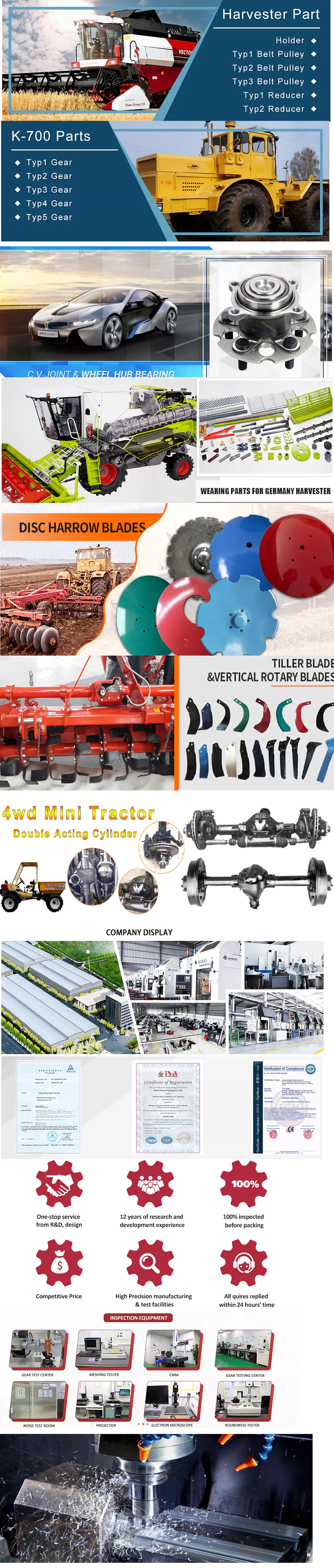
24 square meters, is 1 of the most professional tractor manufacturer in China. With 20 years development, Taihong is capable of producing tractor from 25hp to 240hp and has a large market share at home and abroad. Taihong has its own foundry, casting, machinery processing center. Some parts are made by itself to realize the whole quality control from spare parts. The products are certified by ISO9001, SGS, CCC and BV.
5. Assembly lines and suffiecient stock
6. Our Products list and Certificates
7. The farm implements: Disc plough, disc harrow, cultivator, potato harvestor, mower, front end loader and pbackhoe, snowbrush, hay baler, planter etc.
7.Package: metal package or nude package
8. Service and Warranty: For main parts,warrnty period is 1 year from the BL date. During the warranty, if the problem is occuring, please send us problem desctriptions and photos for technical analysis, we will be acting immediately and give solution within 24 hours. From technical analysis,if the problem is because of make, craftsmanship and the manufacturing reason; the relative charges will be borne by seller; if the problem is caused by improper operation, the buyer will take the responsibility and bear the relative charges and seller will try his best provide and other possible support and assistance to solve the problem.
9. Contact Us: HangZhou Taihong Tractor Co.,Ltd Address: Baotong Street, HangZhou City, ZheJiang Province, China. wftaihong Contact person: Julia
Model
TH2204
type
4*4 wheel type
Overall dimensios(mm)
length
5350
width
2400
heigth
3018
wheel tread
front wheel
1760,1860,1960
rear wheel
1700-2300(stepless adjustable )
Axle base
2700
Min Ground clearance
470 from the bottom of oil tank
sturcturer weight(kg)
5600
engine
model
WP6G210E330
type
inline, water cooled, four stroke, electric start
rated power kw
220HP
rated speed (r/min)
2200
fuel type
diesel
tire
front wheel
540 65R30
rear wheel
650/65R32
clutch
dual stage clutch
steering
cycloid rotary valve, full hydraulic steering
transimission
4*(2+1)*2
Supension type
rear postioned 3-point links catageory ii
PTO
type and speed
540/1000
spline size
ø38\ø8 rectangle spline
Model
TH2204
type
4*4 wheel type
Overall dimensios(mm)
length
5350
width
2400
heigth
3018
wheel tread
front wheel
1760,1860,1960
rear wheel
1700-2300(stepless adjustable )
Axle base
2700
Min Ground clearance
470 from the bottom of oil tank
sturcturer weight(kg)
5600
engine
model
WP6G210E330
type
inline, water cooled, four stroke, electric start
rated power kw
220HP
rated speed (r/min)
2200
fuel type
diesel
tire
front wheel
540 65R30
rear wheel
650/65R32
clutch
dual stage clutch
steering
cycloid rotary valve, full hydraulic steering
transimission
4*(2+1)*2
Supension type
rear postioned 3-point links catageory ii
PTO
type and speed
540/1000
spline size
ø38\ø8 rectangle spline
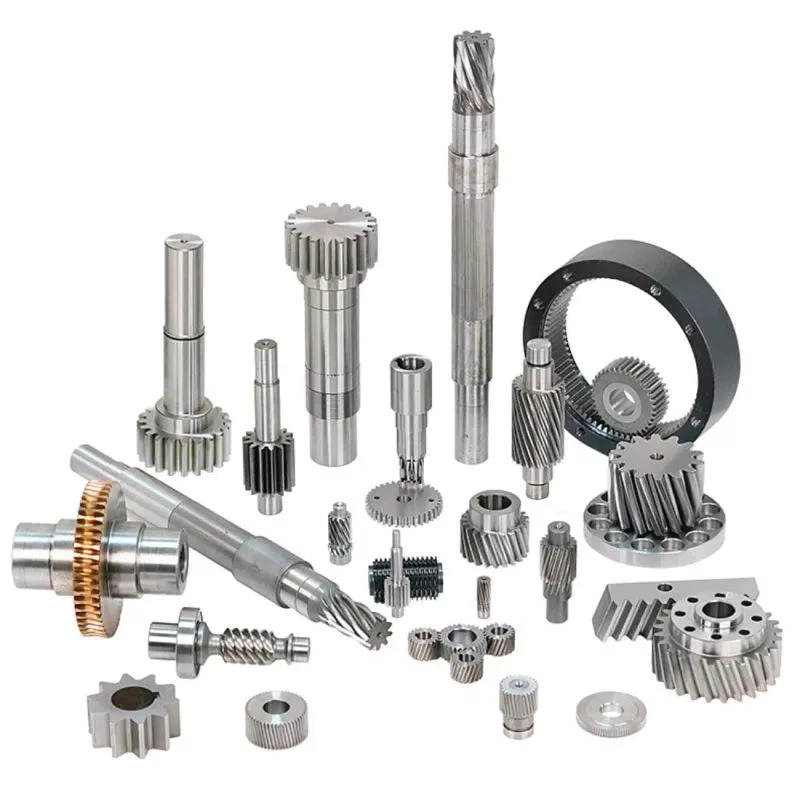
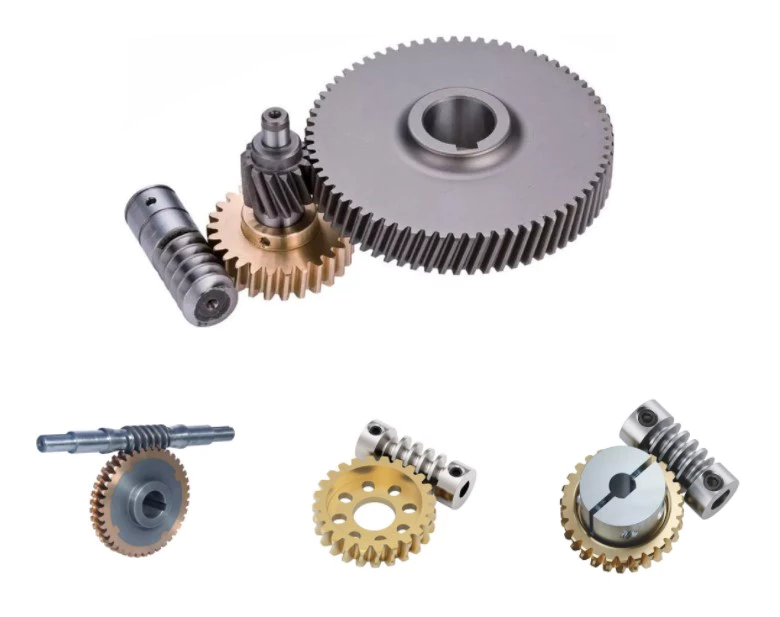
How to Determine the Quality of a Worm Shaft
There are many advantages of a worm shaft. It is easier to manufacture, as it does not require manual straightening. Among these benefits are ease of maintenance, reduced cost, and ease of installation. In addition, this type of shaft is much less prone to damage due to manual straightening. This article will discuss the different factors that determine the quality of a worm shaft. It also discusses the Dedendum, Root diameter, and Wear load capacity.
Root diameter
There are various options when choosing worm gearing. The selection depends on the transmission used and production possibilities. The basic profile parameters of worm gearing are described in the professional and firm literature and are used in geometry calculations. The selected variant is then transferred to the main calculation. However, you must take into account the strength parameters and the gear ratios for the calculation to be accurate. Here are some tips to choose the right worm gearing. The root diameter of a worm gear is measured from the center of its pitch. Its pitch diameter is a standardized value that is determined from its pressure angle at the point of zero gearing correction. The worm gear pitch diameter is calculated by adding the worm’s dimension to the nominal center distance. When defining the worm gear pitch, you have to keep in mind that the root diameter of the worm shaft must be smaller than the pitch diameter. Worm gearing requires teeth to evenly distribute the wear. For this, the tooth side of the worm must be convex in the normal and centre-line sections. The shape of the teeth, referred to as the evolvent profile, resembles a helical gear. Usually, the root diameter of a worm gear is more than a quarter inch. However, a half-inch difference is acceptable. Another way to calculate the gearing efficiency of a worm shaft is by looking at the worm’s sacrificial wheel. A sacrificial wheel is softer than the worm, so most wear and tear will occur on the wheel. Oil analysis reports of worm gearing units almost always show a high copper and iron ratio, suggesting that the worm’s gearing is ineffective.
Dedendum
The dedendum of a worm shaft refers to the radial length of its tooth. The pitch diameter and the minor diameter determine the dedendum. In an imperial system, the pitch diameter is referred to as the diametral pitch. Other parameters include the face width and fillet radius. Face width describes the width of the gear wheel without hub projections. Fillet radius measures the radius on the tip of the cutter and forms a trochoidal curve. The diameter of a hub is measured at its outer diameter, and its projection is the distance the hub extends beyond the gear face. There are two types of addendum teeth, one with short-addendum teeth and the other with long-addendum teeth. The gears themselves have a keyway (a groove machined into the shaft and bore). A key is fitted into the keyway, which fits into the shaft. Worm gears transmit motion from two shafts that are not parallel, and have a line-toothed design. The pitch circle has two or more arcs, and the worm and sprocket are supported by anti-friction roller bearings. Worm gears have high friction and wear on the tooth teeth and restraining surfaces. If you’d like to know more about worm gears, take a look at the definitions below.
CZPT’s whirling process
Whirling process is a modern manufacturing method that is replacing thread milling and hobbing processes. It has been able to reduce manufacturing costs and lead times while producing precision gear worms. In addition, it has reduced the need for thread grinding and surface roughness. It also reduces thread rolling. Here’s more on how CZPT whirling process works. The whirling process on the worm shaft can be used for producing a variety of screw types and worms. They can produce screw shafts with outer diameters of up to 2.5 inches. Unlike other whirling processes, the worm shaft is sacrificial, and the process does not require machining. A vortex tube is used to deliver chilled compressed air to the cutting point. If needed, oil is also added to the mix. Another method for hardening a worm shaft is called induction hardening. The process is a high-frequency electrical process that induces eddy currents in metallic objects. The higher the frequency, the more surface heat it generates. With induction heating, you can program the heating process to harden only specific areas of the worm shaft. The length of the worm shaft is usually shortened. Worm gears offer numerous advantages over standard gear sets. If used correctly, they are reliable and highly efficient. By following proper setup guidelines and lubrication guidelines, worm gears can deliver the same reliable service as any other type of gear set. The article by Ray Thibault, a mechanical engineer at the University of Virginia, is an excellent guide to lubrication on worm gears.
Wear load capacity
The wear load capacity of a worm shaft is a key parameter when determining the efficiency of a gearbox. Worms can be made with different gear ratios, and the design of the worm shaft should reflect this. To determine the wear load capacity of a worm, you can check its geometry. Worms are usually made with teeth ranging from one to four and up to twelve. Choosing the right number of teeth depends on several factors, including the optimisation requirements, such as efficiency, weight, and centre-line distance. Worm gear tooth forces increase with increased power density, causing the worm shaft to deflect more. This reduces its wear load capacity, lowers efficiency, and increases NVH behavior. Advances in lubricants and bronze materials, combined with better manufacturing quality, have enabled the continuous increase in power density. Those three factors combined will determine the wear load capacity of your worm gear. It is critical to consider all three factors before choosing the right gear tooth profile. The minimum number of gear teeth in a gear depends on the pressure angle at zero gearing correction. The worm diameter d1 is arbitrary and depends on a known module value, mx or mn. Worms and gears with different ratios can be interchanged. An involute helicoid ensures proper contact and shape, and provides higher accuracy and life. The involute helicoid worm is also a key component of a gear. Worm gears are a form of ancient gear. A cylindrical worm engages with a toothed wheel to reduce rotational speed. Worm gears are also used as prime movers. If you’re looking for a gearbox, it may be a good option. If you’re considering a worm gear, be sure to check its load capacity and lubrication requirements.
NVH behavior
The NVH behavior of a worm shaft is determined using the finite element method. The simulation parameters are defined using the finite element method and experimental worm shafts are compared to the simulation results. The results show that a large deviation exists between the simulated and experimental values. In addition, the bending stiffness of the worm shaft is highly dependent on the geometry of the worm gear toothings. Hence, an adequate design for a worm gear toothing can help reduce the NVH (noise-vibration) behavior of the worm shaft. To calculate the worm shaft’s NVH behavior, the main axes of moment of inertia are the diameter of the worm and the number of threads. This will influence the angle between the worm teeth and the effective distance of each tooth. The distance between the main axes of the worm shaft and the worm gear is the analytical equivalent bending diameter. The diameter of the worm gear is referred to as its effective diameter. The increased power density of a worm gear results in increased forces acting on the corresponding worm gear tooth. This leads to a corresponding increase in deflection of the worm gear, which negatively affects its efficiency and wear load capacity. In addition, the increasing power density requires improved manufacturing quality. The continuous advancement in bronze materials and lubricants has also facilitated the continued increase in power density. The toothing of the worm gears determines the worm shaft deflection. The bending stiffness of the worm gear toothing is also calculated by using a tooth-dependent bending stiffness. The deflection is then converted into a stiffness value by using the stiffness of the individual sections of the worm shaft. As shown in figure 5, a transverse section of a two-threaded worm is shown in the figure.
As one of leading gearbox agricultural manufacturers, suppliers and exporters of mechanical products, We offer gearbox agricultural and many other products.